
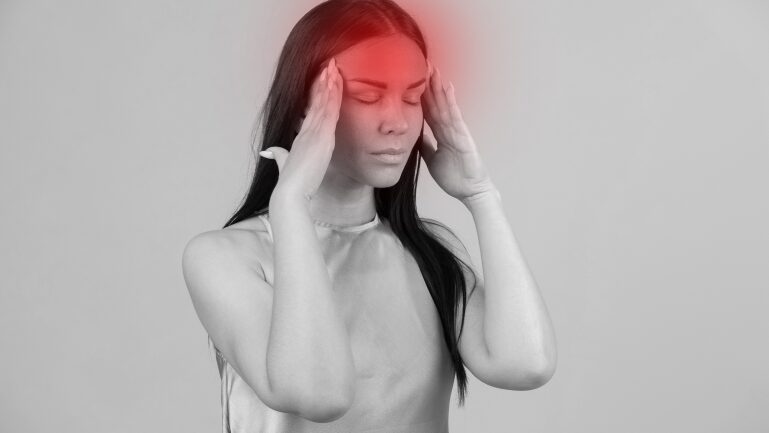
I Suffer From Menstrual Migraine
Menstrual migraines are ranked in the top 5 most disabling conditions for women. Menstrual migraine attacks affect women in Sydney at different points throughout their menstrual cycle. Their migraine can typically peak on the day of their menstrual cycles, a few days before, or a few days after their cycle and can last for a couple of hours to 5 days (most commonly 3 days).
If your symptoms can be reproduced and resolved, expect a significant improvement to occur rapidly within the first 5 treatment consultations, as has been the case with over 85% of our Sydney Menstrual Migraine patients. We have treated countless patients who experience mild to severe menstrual migraine attacks and have had significant results. Our treatment is effective in alleviating or dramatically reducing migraines in 85-90% of sufferers.
Take the first step towards relief from migraine headaches and a better quality of life. Schedule your consultation today and experience the difference.
Understanding Your Migraine
The Types of Menstrual Migraine
There are two common types of menstrual migraine. Pure Menstrual Migraine and Menstrual Related Migraines.
1. Pure Menstrual Migraine
A pure menstrual migraine is a migraine that typically occurs only 1-3 days before or after menstruation. To fulfil this diagnosis, the migraines must occur in more than 60% of your menstrual cycle, must occur only during the time of the menstrual cycle, and you cannot suffer from a migraine at any other time. Pure Menstrual Migraines are less common than menstrually related migraine attacks and occur in approximately 10% of women who suffer from migraines during their menstrual cycle.
2. Menstrually Related Migraine
Menstrual related migraines are migraines that typically occur 1-3 days before or after the menstruation, as well as additional migraines that fall outside of the cycle. Menstrual related migraines are more common than pure menstrual migraine, and they must occur in more than 60% of your cycles.
Understanding Your Headache
What is the Cause of Menstrual Migraine?
Recent research performed by leading experts in this field has found those suffering from menstrual migraines do not generally have any hormonal abnormalities. This indicates and proves that hormone levels, once thought to trigger menstrual migraines, are not responsible nor the cause of menstrual migraines. Furthermore, many females experience menstrual migraines during the final stages of their period, a point in time where oestrogen levels are rising.
Discoveries within recent research have found the primary contributing factor of menstrual migraine attack to be related to the neck, and predominantly a fault in the upper cervical spine, resulting in a sensitised brainstem. When the brainstem becomes hypersensitive, it becomes highly sensitive to even small amounts of sensory or chemical changes to the body. In the case of Menstrual Migraine, it is thought that the slight changes in oestrogen levels (although perfectly normal), are interpreted by the sensitised brainstem as something wrong with the body, which results in headache pain and other symptoms of Migraine.

More About Menstrual Migraines
Menstrual Migraine Treatment and the contraceptive pill
Clinicians around the world are now beginning to point to the neck as the primary cause of migraines and have begun treating the cervical spine rather than prescribing medications or hormone replacement therapy, including hormonal birth control pills.
This means that Menstrual Migraine treatment will not have any impact on the contraceptive pill!
Old theory of the cause of Menstrual Migraines
The traditional and old theory of the cause of menstrual migraines was the changes in hormonal levels in the body during the menstrual cycle hence the outdated term for menstrual migraines – “hormonal headaches”. During the cycle, there is a fall in oestrogen levels at the beginning of the period. This fall in hormonal oestrogen levels was thought to trigger a menstrual migraine. However, the changes in hormonal levels are in fact the same regardless of whether a female suffers from a menstrual migraine or not.
I’ve Tried Everything Already. How Can I Treat My Menstrual Migraine?
Treating Your Menstrual Migraine
We have treated a countless number of patients with menstrual migraines with significant results. Our treatment is effective in alleviating or dramatically reducing migraines in 85-90% of sufferers.
An important note to remember is that menstrual migraines do not have anything to do with hormonal abnormalities. Hence, medicating to alter one’s own natural hormonal levels has been shown to not be the safest or best treatment or menstrual migraine prevention option.
If you suffer from menstrual migraines, have your neck assessed to see whether that is the cause of your problems.